Blind Corner Cabinet Solutions: Best Options, Measurements & Mistakes to Avoid
The best blind corner cabinet solutions are rarely the ones that hold the most. The best ones are the systems you can actually reach, clean, and use every day without fighting the cabinet.
Blind corner cabinet solutions at a glance
Blind corner cabinet solutions turn hidden corner space into usable storage, but each option solves a different problem. A blind corner cabinet is a cabinet that extends into corner space that you cannot fully see or reach from the front opening .
The quickest way to choose is to match the organizer to your cabinet type, opening size, budget, and how much bending or reaching you want to do. In most kitchens, the practical categories are simple shelves, a blind corner shelf pull out, swing-out or pivot systems, corner drawers, custom removable trays, and pantry-style redesigns .
A standard shelf setup is the budget option, but it gives the worst access because the back zone stays hidden. A pull-out or swing-out improves access by moving stored items toward the door opening instead of leaving them buried in the corner .
Corner drawers are usually the easiest to use daily, but they normally make sense during new cabinetry or a larger renovation rather than as a simple retrofit. A full pantry redesign can outperform any organizer when the layout gives you room to replace awkward blind corner storage with better drawer banks or a tall pantry cabinet .
Here is the short version homeowners actually need:
Solution
Best for
Budget tier
Accessibility
Retrofit fit
Main tradeoff
Fixed shelves
Lowest-cost improvement
Low
Low
Easy
Deep back space stays awkward
Bins and trays
Budget organization
Low
Low to medium
Easy
You still reach into the corner
Blind corner cabinet pull out
Existing base cabinet upgrades
Medium to high
Medium to high
Good if specs fit
Opening width matters
Swing-out or pivot system
Better visibility and reach
High
High
Good if clearances work
More moving parts
Corner drawers
Custom kitchens
Premium
High
Poor retrofit choice
Cabinet rebuild needed
Custom removable drawers
Odd cabinet sizes
High to premium
Medium to high
Case by case
Usually custom millwork
Pantry redesign
Full remodels
Premium
High
Not a simple retrofit
Layout change required
If you want an editor’s-pick style summary, this is the honest version. Best retrofit choice: a well-fitted pull-out. Best for a small opening: simple trays or a custom interior layout. Best premium option: corner drawers. Best budget option: handled bins and front-back zoning. Best accessibility-first option: a system that brings the rear contents fully forward with minimal bending .
What is a blind corner cabinet, and why is it hard to use?
A blind corner cabinet is hard to use because part of the cabinet extends into a hidden corner behind the opening. That hidden section creates poor visibility, awkward reaching, and wasted storage because the back area cannot be accessed directly from the front .
The problem is usually worse in base cabinets because you have to bend, kneel, and reach into a dark lower corner to get to the back. That is why blind corner base cabinet solutions get more attention than upper-cabinet organizers in most kitchens .
Upper blind corners create a different issue because the reach is higher and the storage should stay lighter. A blind corner upper cabinet solution can help with visibility, but upper organizers are usually more limited than base-cabinet systems and work best for lighter items only .
Pantries can have the same blind-corner problem when deep shelves run into an L-shape or a hidden side section. Blind corner pantry solutions usually focus on shelf zoning, pull-out baskets, better lighting, and making sure daily-use items stay near the opening rather than deep in the corner .
Blind corners show up most often in L-shaped and U-shaped kitchen layouts because two cabinet runs meet at ninety degrees. The corner is real storage volume, but it becomes low-value storage if the opening does not let you reach that volume comfortably .
Best blind corner cabinet solutions compared
The best blind corner storage systems depend less on total space and more on how the mechanism brings items into view. A solution that holds slightly less can still be better if it lets you see everything and reach it without twisting into the cabinet .
A simple fixed-shelf setup works when budget matters most and the stored items are not used every day. It is cheap and easy to maintain, but it leaves the back of the cabinet as low-access storage and usually needs bins or baskets to stay usable .
A half-moon or kidney-style shelf is the classic lazy-susan alternative when the cabinet geometry allows rotating shelves. It can improve reach compared with fixed shelves, but it does not always use the full blind corner as efficiently as newer pull-out categories .
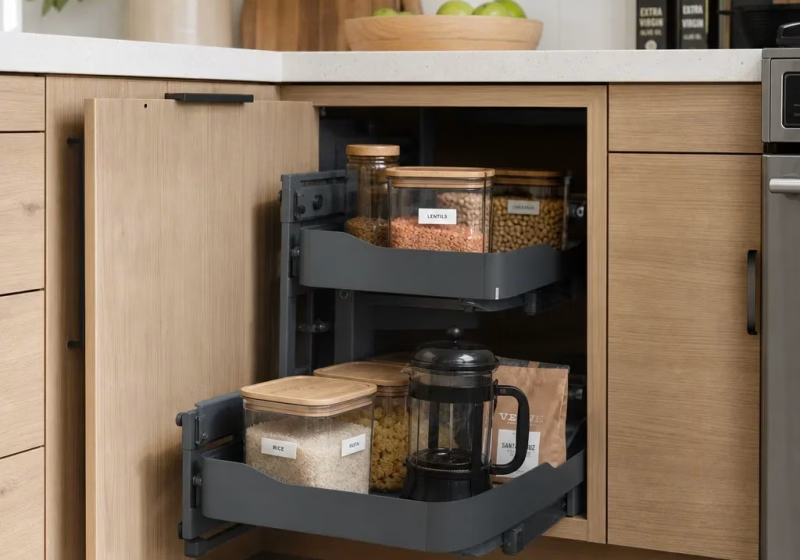
A blind corner pull-out uses slides, frames, or linked shelves to move hidden contents toward the opening. This category is often the best balance for retrofits because it can improve access without replacing the whole kitchen, but exact fit depends on door opening width, cabinet interior size, and handing .
A swing-out or pivot-slide system improves visibility by moving shelves out in stages or arcs. These premium corner cabinet access solutions are usually easier to use than simple shelves, but they have more hardware, more clearance requirements, and more points that must stay aligned over time .
Corner drawers are usually the most intuitive option because each drawer opens like a normal drawer instead of making you reach into a hidden cavity. They are strong design choices in custom kitchens, but they are not usually the answer for an existing blind cabinet because the cabinet box itself must be redesigned .
Custom removable drawers or trays make sense when standard hardware does not fit the cabinet opening or the homeowner wants a simpler system with fewer moving parts. This approach can be especially useful for small opening blind corner cabinet solutions where branded mechanisms may be too bulky for the available access .
A pantry-style redesign beats aftermarket hardware when the whole corner is being reconsidered during a renovation. Sometimes the smartest move is not a better organizer at all, but replacing the blind corner with wider drawers, a tall pantry, or a different cabinet plan that avoids hidden storage altogether .
Branded product families like Rev-A-Shelf, Kessebohmer LeMans, Magic Corner, Cloud, Girasolo, Hafele, and Richelieu are examples of categories, not universal answers. Manufacturer specifications, handing, and clearance rules vary by model, so the right choice comes from fit and use, not from the brand name alone .
Blind corner pull-out vs lazy susan vs corner drawers vs pantry
A blind corner shelf pull out is usually the best fit when you already have a blind base cabinet and want better access without rebuilding the kitchen. It improves reach by bringing stored items outward, which is why it is often the strongest retrofit option when the cabinet opening and clearances allow it .
A lazy susan or diagonal corner cabinet is usually better when you are planning new cabinetry and can redesign the corner before installation. That route can avoid a blind cavity entirely, which is often a better long-term answer than trying to fix one after the cabinets are already built .
Corner drawers are best when visibility and daily convenience matter more than squeezing every inch from the corner. They are premium because they require custom or semi-custom cabinetry, but they are also among the easiest options to use because the contents are visible from above when the drawer opens .
A pantry redesign is better when the kitchen layout can support taller or wider storage outside the corner. If the corner pantry or blind pantry section is frustrating now, a better renovation plan may be to reduce deep hidden shelves and replace them with shallower, better-zoned storage .
This decision matrix keeps the tradeoffs simple:
Scenario
Best fit
Why
Existing blind base cabinet, decent opening
Blind corner cabinet pull out
Good retrofit balance of access and storage
New kitchen design
Diagonal corner or corner drawers
Avoids the blind cavity from the start
Small opening
Trays, bins, or custom interior layout
Large mechanisms may not fit or clear
Accessibility-first
Full-extension pull-forward system
Less bending and less reaching into the back
Heavy cookware
Strong base-cabinet solution with verified hardware limits
Keeps weight low and controlled
Pantry goods
Pull-out baskets, labeled bins, or a pantry redesign
Better visibility and stock control
Premium remodel
Corner drawers or reworked layout
Best daily usability
What is better than a Lazy Susan depends on the goal. If you want easier reach in an existing blind cabinet, a pull-out or swing-out is often better. If you are renovating from scratch, corner drawers or a different layout are often better than both .
How to measure a blind corner cabinet before buying organizers
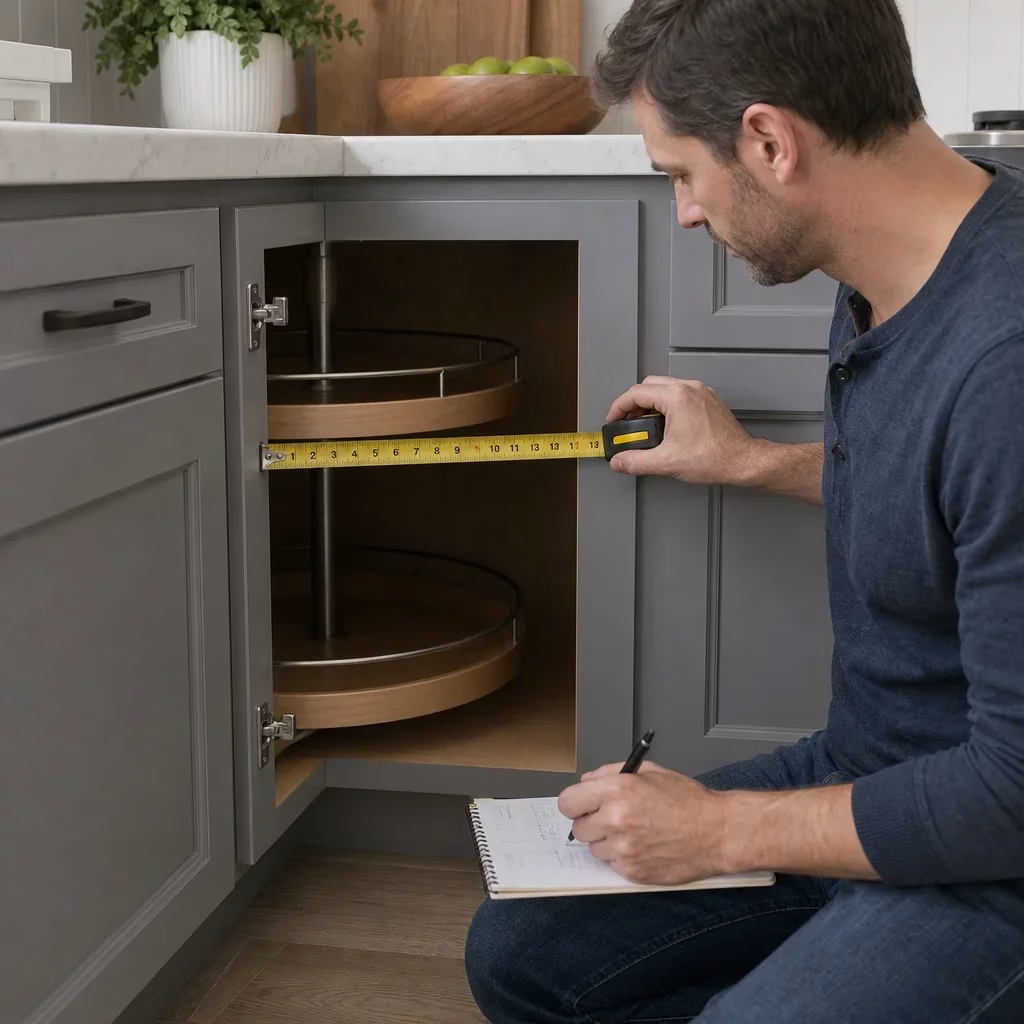
The most important measurement is usually the clear door opening, not the outside cabinet width. A blind corner organizer has to pass through the actual opening and clear the face frame, hinges, and nearby hardware before it can work properly .
The core measurements to take are interior cabinet width, interior depth, interior height, clear door opening width, face-frame opening size, and whether the door style is inset or overlay. You also need to note the opening side, nearby appliance handles, filler strips, plumbing, electrical lines, and whether any interior shelves are fixed .
Left-hand and right-hand orientation matter because the hidden portion of the cabinet sits on one side of the opening. If the door is on the left and the deeper hidden space extends to the right, the organizer must be selected for that handing rather than the reverse .
Small opening blind corner cabinet solutions are limited because the opening can block premium mechanisms even when the cabinet itself looks large enough. That is why homeowners get caught by the common mistake of measuring the box but not the path the hardware must travel through .
A practical pre-purchase checklist prevents most failures:
Measure the interior width, depth, and height
Measure the narrowest clear opening at the face frame
Confirm left-hand or right-hand blind orientation
Check hinge swing and hinge projection into the opening
Check for adjacent handles, knobs, and appliance doors
Look for plumbing, electrical, or floor irregularities inside the cabinet
Confirm whether shelves are removable or fixed
Read the chosen manufacturer’s specs before ordering
Exact blind corner cabinet dimensions vary by manufacturer and mechanism, so no organizer should be bought on a generic internet dimension alone. The only safe rule is to match your real cabinet measurements to the selected hardware’s current installation manual .
Best solutions by cabinet type and use case
Base cabinets benefit most from moving storage outward because the low position makes deep reaches uncomfortable. Blind corner base cabinet solutions are usually the best place to spend money if the corner currently holds cookware, appliances, or bulky kitchen items .
Heavy items belong in a base-cabinet setup only if the selected hardware is rated for that load by the manufacturer. Without a verified load rating, the safe approach is to keep very heavy cast iron or dense appliances on sturdier, easier-access shelves or drawers instead of assuming any blind corner pull-out can handle them .
Upper blind corners work best with lighter, lower-risk items because the reach is higher and visibility is weaker. A blind corner wall cabinet organizer or blind corner upper cabinet solution can be useful for serving pieces, storage containers, or seasonal items, but it is rarely the best place for heavy dishes or breakable daily-use glassware .
Pantry corners need visibility more than raw volume because food gets forgotten when it disappears behind a wall of deep shelves. Blind corner pantry solutions usually work best with labeled bins, baskets, shelf zoning, and added lighting so the front zone handles daily use and the back zone holds overflow .
Small-opening cabinets need simpler plans because the door path limits what can be installed. In that situation, blind corner storage drawers, removable trays, or bins with handles often outperform large premium mechanisms that look great online but cannot clear the opening in the real cabinet .
Blind corners can also work in a pantry, laundry room, garage, or utility room if the contents are grouped properly. These spaces usually benefit from bins, pull-out baskets, and labels because the goal is controlled categories and visibility rather than decorative kitchen hardware .
What to store in a blind corner cabinet
The best items for blind corner storage are medium-use items that are bulky but not needed every day. Good examples are mixing bowls, food containers, serving platters, small appliances, paper products, pantry overflow, and moderate-use pots and pans .
Daily-use items should stay near the front opening because blind corners are slower to access than standard drawers. Coffee gear, everyday dishes, cooking oils, and children’s lunch supplies usually do better in full-view storage rather than in the deep back zone .
Fragile items and likely spills should stay out of the deepest corner because poor visibility makes breakage and messes harder to deal with. Glassware, leak-prone bottles, and lightly packed pantry goods are poor choices for the farthest hidden section .
A front-back zoning system makes blind cabinet storage ideas more practical than random stacking. The front zone should hold weekly-use items, while the back zone should hold backup stock, seasonal pieces, or low-frequency kitchen tools .
These category ideas work well in real homes:
Location
Good items
Avoid
Base kitchen corner
Pots, mixing bowls, appliances, containers
Daily cooking essentials, heavy unverified loads
Upper corner
Serving ware, plastic containers, seasonal pieces
Heavy dishes, everyday glassware
Pantry corner
Dry-goods bins, paper products, overflow stock
Small loose packets without bins
Laundry corner
Cleaning refills, paper goods, spare supplies
Leak-prone products without trays
Garage or utility corner
Light hardware bins, seasonal accessories
Uncontained chemicals or very heavy tools
DIY blind cabinet storage ideas vs custom renovation solutions
DIY blind cabinet storage solutions work best when the cabinet box is sound and the main problem is organization, not layout. Handled bins, sliding trays, removable baskets, shelf risers, labels, and battery puck lights are all practical budget upgrades because they improve visibility without changing the cabinet structure .
A mid-range DIY approach adds aftermarket pull-outs or custom plywood trays if the cabinet dimensions and clearances cooperate. This can be a good step between simple bins and a full renovation, but the fit still depends on accurate measuring and realistic expectations about the opening size .
Custom renovation work is better when the cabinet opening is awkward, the doors conflict with appliances, the existing cabinets are worn, or the whole kitchen needs a better plan. At that point, managing the blind corner is usually less valuable than redesigning it out of the layout or replacing it with drawers or a pantry solution .
The real tradeoff is management versus redesign. DIY can improve access, but a renovation can remove the problem instead of organizing around it .
This comparison keeps the choice clear:
Approach
Budget tier
Best for
Limitation
Bins, trays, risers, labels
Budget
Fast organization fix
Blind reach remains
Aftermarket organizer kit
Mid-range
Better access in an existing cabinet
Fit and clearance can kill the install
Custom interior trays
High
Odd cabinet sizes
Still working around original cabinet box
Cabinet redesign or new layout
Premium
Best long-term usability
Higher project scope
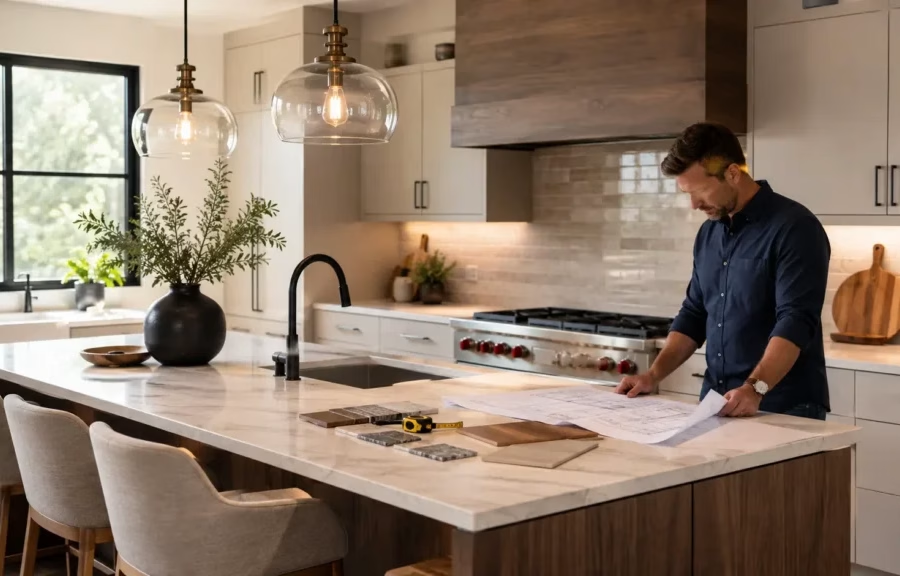
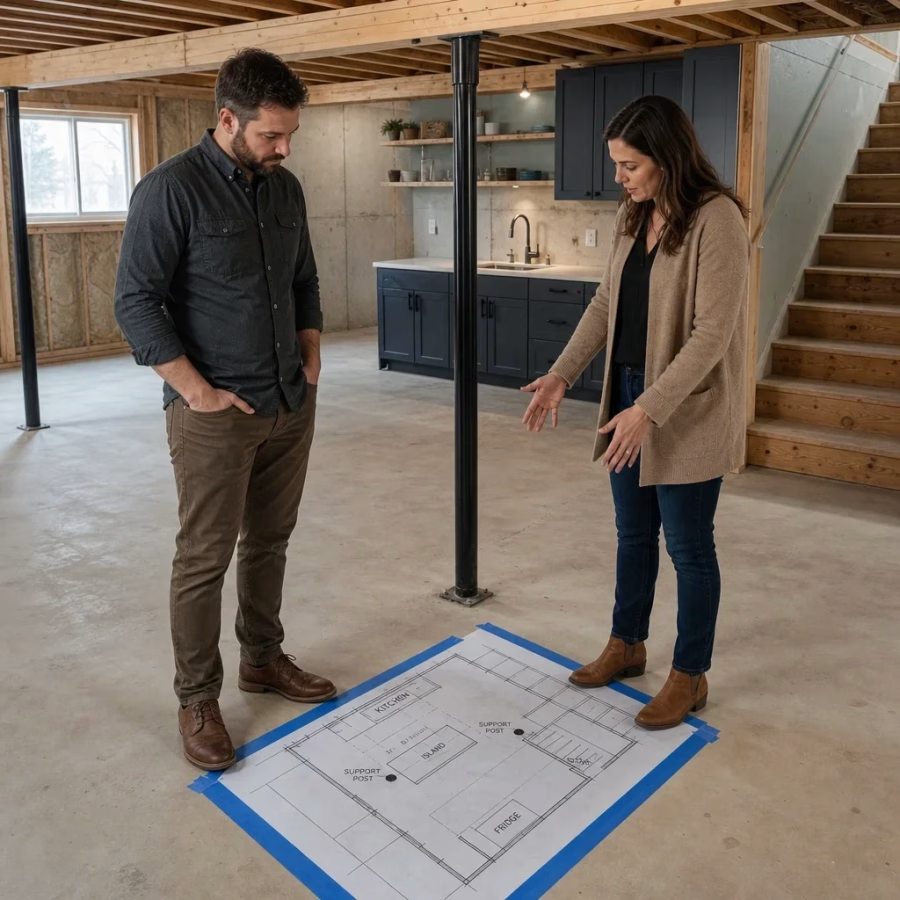
If you are already planning custom kitchen cabinets or a larger remodel in Toronto, bring measurements and photos into the design stage. That is the point where a contractor can tell you whether a retrofit organizer is enough or whether the corner should be redesigned altogether .
How to install or retrofit a blind corner organizer
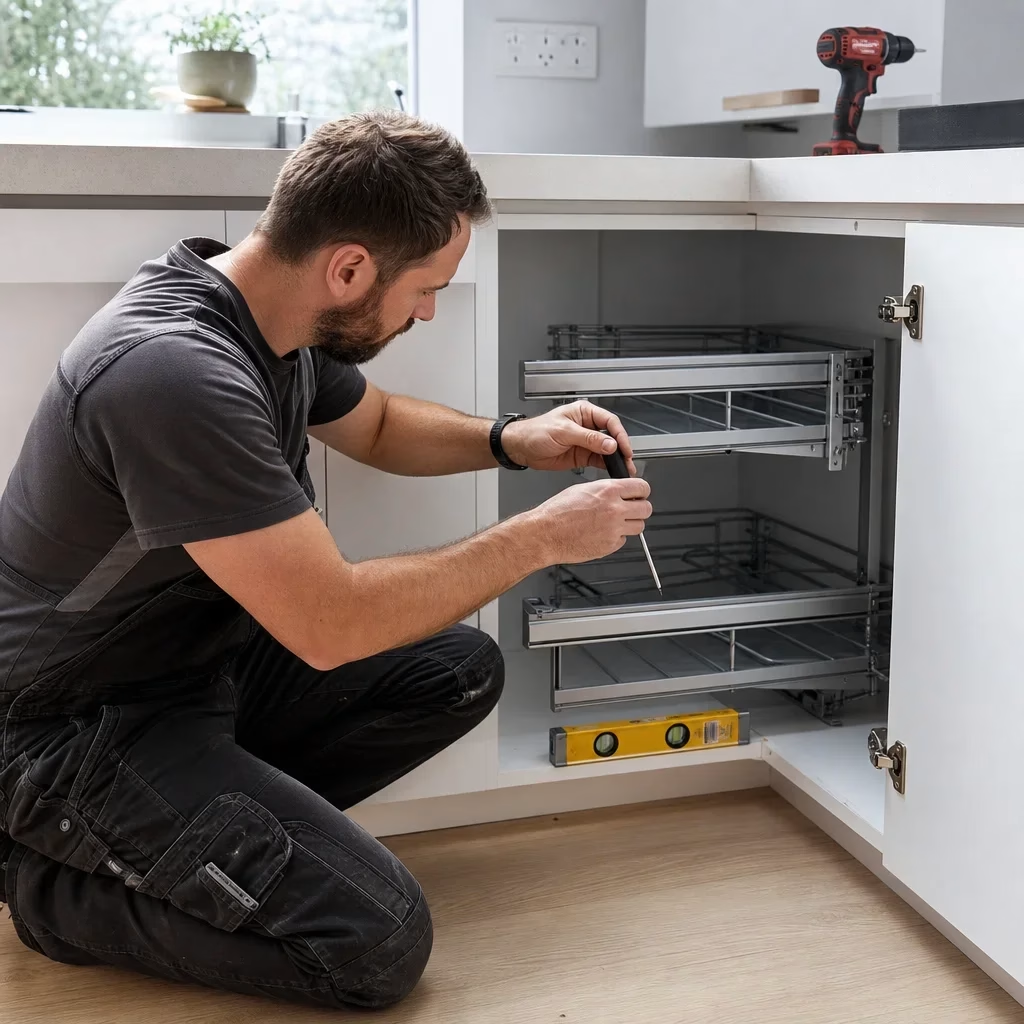
A successful retrofit starts with measuring and clearance checks, not with drilling holes. Every blind corner storage system installs differently, so the safe universal process is to empty the cabinet, confirm handing, verify the manufacturer’s current spec sheet, remove anything that interferes, install the frame or slides, adjust alignment, test movement, and load the system gradually .
Base-mounted systems attach to the cabinet floor or bottom panel and rely on a stable, level surface. Side-mounted systems use cabinet walls for support, while door-connected systems link the organizer movement to the door action so contents come forward when the door opens .
Most retrofit failures happen because the cabinet is not as square or as clear as expected. Face-frame interference, uneven cabinet floors, fixed shelves, plumbing, hinge projection, and nearby appliance handles are all specific clearance issues that can make a blind corner organizer fail even when the rough cabinet size seems acceptable .
No universal installation dimensions should be trusted across brands because hardware geometry changes from one system to another. The correct install always comes from the exact model manual, not from a generic tutorial or a product photo that looks similar .
Common blind corner cabinet mistakes to avoid
The biggest mistake is choosing by storage volume instead of daily usability. A system that technically stores more can still be the worse choice if you hate using it and the back items become dead space again within a month .
Ignoring the clear opening is the mistake that ruins the most retrofit purchases. The organizer has to fit through the actual opening path, clear the hinges and frame, and move without hitting nearby hardware or appliances .
Skipping the left-right orientation check is another common failure because the mechanism has to match the direction of the hidden cavity. A left-hand unit in a right-hand cabinet is not a small adjustment problem; it is the wrong product for the box .
Overloading the hardware shortens the life of slides, pivots, and mounting points. If the manufacturer does not verify a load for that model, store lighter items and distribute weight evenly rather than guessing what the system can carry .
Poor pantry planning wastes deep corners just as badly as poor cabinet hardware. Common corner pantry mistakes are shelves that are too deep, no labels, weak lighting, inaccessible high shelves, and no distinction between daily-use zones and backup storage zones .
Aesthetic-first design decisions can also create a worse kitchen. A sleek corner detail may look good on a drawing, but if it forces a tiny opening or awkward door swing, the finished storage can be less functional than a simpler cabinet plan .
Accessibility, ergonomics, and long-term durability
The most accessible corner cabinet access solutions are the ones that bring the contents fully toward the user. For shorter users, older adults, or homeowners with mobility limitations, a pull-forward or swing-out mechanism is usually easier than deep shelves because it reduces kneeling, twisting, and blind reaching .
Tall users usually struggle less with reach depth and more with low bending angles in base cabinets. That is why a mechanism that raises visibility and reduces the need to crouch can feel better than a deeper shelf that technically holds more .
Upper cabinets should prioritize visibility and light weight because shoulder-height reaching is less stable than waist-height pulling. For accessibility, the best upper-corner plan is often simply storing only light, occasional-use items there rather than trying to force high-capacity storage into an awkward zone .
Long-term maintenance matters because moving hardware wears over time. Common failure points are sagging slides, squeaks, loose fasteners, dirty tracks, basket deformation, and alignment drift that makes the organizer scrape or stop closing smoothly .
The best maintenance routine is simple and periodic. Wipe tracks, keep debris out of pivots, avoid overloading, distribute weight evenly, and re-tighten accessible fasteners from time to time so the mechanism stays aligned longer .
Can you avoid a blind corner cabinet entirely?
Yes, and in a full remodel that is often the smartest answer. The best alternative to a blind corner cabinet is usually a layout that uses standard drawers, a diagonal corner cabinet, a tall pantry, open shelving, or better adjacent storage instead of paying for complex hardware to fix a weak cabinet plan .
Corner drawers are one of the strongest alternatives because they give direct visibility and normal drawer access. They are usually more expensive and more custom, but they solve the usability issue at the cabinet-design level instead of with internal mechanisms .
A dead corner can even be acceptable if the surrounding storage becomes better. In some renovations, sacrificing hard-to-use corner volume creates room for wider drawer banks or a cleaner appliance layout that works better every day .
A corner pantry is not always the best answer either. What to do instead of a corner pantry depends on the footprint, but a tall straight pantry, shallower shelving, or a reworked cabinet run can sometimes deliver more usable storage with less hidden depth .
The premium-renovation lesson is simple: sometimes the best blind corner storage solutions are no blind corner at all. If the kitchen is being rebuilt, eliminating the problem can be better than accessorizing it .
How to choose the right blind corner solution for your kitchen
The right choice comes from five factors: current cabinet layout, opening size, what you store, budget, and whether this is a retrofit or a renovation. If even one of those factors points the other way, the fanciest organizer can still be the wrong answer .
This final checklist makes the decision easier:
1. Confirm whether you have a base cabinet, upper cabinet, pantry corner, or full layout problem 2. Measure the actual opening and interior space before looking at products 3. Decide whether you need maximum storage or easiest daily access 4. List what will live there, especially heavy or fragile items 5. Choose between budget organization, retrofit hardware, or full redesign 6. Verify all specs against the exact manufacturer manual before buying
A quick scenario summary helps:
Scenario
Best choice
Budget refresh
Bins, trays, labels, and front-back zoning
Heavy cookware
Verified base solution or better adjacent drawers
Pantry goods
Bins, baskets, lighting, or pantry redesign
Small opening
Simple trays or custom interior layout
Accessibility-first
Pull-forward mechanism with easy reach
Full remodel
Corner drawers, diagonal corner, tall pantry, or new layout
If you are planning a kitchen renovation, this is where design advice matters more than product hype. A good design consultation can tell you whether to retrofit the existing blind corner, build a better custom cabinet, or remove the blind corner from the plan entirely.
FAQ
What is a blind corner cabinet?
A blind corner cabinet is a cabinet that extends into a corner where part of the storage is hidden behind the front opening. The back section exists, but it is hard to see and reach directly .
What are the common problems with blind corner cabinets?
The most common problems are poor visibility, awkward reaching, wasted back space, and organizers that do not fit the opening properly. Base cabinets add bending and kneeling, while pantry corners often create forgotten food and clutter .
What is the best solution for a corner cabinet?
There is no universal best product. For an existing blind base cabinet, a well-fitted pull-out is often the best retrofit, while a renovation may be better served by corner drawers, a diagonal corner cabinet, or a different layout entirely .
What is better than a Lazy Susan?
A blind corner pull-out, swing-out system, or corner drawers can all be better than a Lazy Susan depending on the cabinet and the goal. For retrofits, pull-outs usually win on access. For new kitchens, drawers or layout changes often win on daily usability .
How do I make a blind corner cabinet more accessible?
Bring the contents forward, reduce deep stacking, and keep daily-use items near the opening. Pull-out hardware, handled bins, removable trays, better lighting, and front-back zoning all improve access .
What can I store in a blind corner cabinet?
Store medium-use bulky items like mixing bowls, containers, serving pieces, small appliances, pantry overflow, and paper goods. Avoid putting fragile daily-use items or unverified heavy loads deep in the hidden back section .
How do I measure a blind corner cabinet for a pull-out organizer?
Measure interior width, depth, height, and the clear door opening first. Then check handing, face-frame size, hinge clearance, nearby handles, fixed shelves, and any plumbing or electrical obstacles before comparing those numbers to the chosen product manual .
Can blind corner organizers work with left-hand and right-hand openings?
Yes, but the organizer must match the cabinet’s orientation. The hidden section can extend left or right of the opening, and the selected mechanism has to be designed for that handing .
What is the best blind corner solution for a small opening?
Simple trays, bins with handles, or custom interior solutions are often the best fit. Many premium mechanisms need more opening clearance than homeowners expect, so small openings usually reward simpler planning .
Can I avoid a blind corner cabinet in a kitchen renovation?
Yes. In a remodel, you may be able to replace the blind corner with corner drawers, a diagonal corner cabinet, a tall pantry, open shelving, or wider adjacent drawers. That is often the best long-term result when the layout allows it .
Bring cabinet measurements and a few kitchen photos before you buy hardware. That one step usually tells you whether a retrofit organizer will solve the problem or whether the better answer is a smarter renovation plan.
admin
Eric came to Canada in 2001 with an engineering degree from Ukraine and the kind of structural mindset that asks why a wall holds before it asks what colour to paint it. Like many newcomers with European credentials, he started over — first on Toronto construction sites, then progressively in design and project oversight as North York builders recognized the engineer behind the toolbelt.