Granite vs Quartz vs Marble Countertops: Which Is Best?
Most homeowners think granite vs quartz vs marble has one clear winner. They’re wrong. The right top for your kitchen or bath depends on how you live, what look you want, and what total installed cost really lands once templating, cutouts, delivery, and install are on the quote.
Granite vs Quartz vs Marble at a Glance
There is no universal best choice between granite versus marble versus quartz. Quartz is usually the easiest day-to-day option, granite is usually the strongest natural-stone middle ground, and marble is the look-driven choice if you accept wear as part of the finish.
Factor
Granite
Quartz
Marble
What it is
Natural stone
Engineered slab made from crushed quartz and binders
Natural metamorphic stone
Look
Natural movement, flecks, depth
More controlled pattern and colour
Soft veining, classic luxury look
Variation slab to slab
High
Low to moderate
High
Sealing
Often recommended
Typically not required
Often recommended
Stain resistance
Good when properly sealed
Strong in normal indoor use
Lower than granite and quartz
Acid resistance
Better than marble, but not immune to damage from harsh cleaners
Better than marble in daily use, but some cleaners can dull or discolour resin-rich surfaces
Most prone to etching from acids
Heat tolerance
Usually the strongest of the three
Lower than granite because binders can be heat-sensitive
Moderate to good, but still not a free pass for hot cookware
Best fit
Natural-stone kitchens, outdoor kitchens, homeowners who want uniqueness
Busy family kitchens, condos, low-maintenance households
Statement bathrooms, lower-abuse kitchens, homeowners who like patina
Quartz is usually the least maintenance kitchen countertop of the three because it does not typically need sealing and the pattern is more predictable when we lay out seams and cutouts.
Granite is usually the best pick if you want natural stone plus stronger heat tolerance and outdoor use potential, because sun and hot cookware are harder on quartz than on most granite slabs.
Marble is usually the best pick for a luxury look, not for a zero-maintenance kitchen, because acids can etch the surface and the finish shows wear faster in a busy cooking zone.
Toronto homeowners should compare installed price, not slab sticker price, because sink cutouts, waterfall ends, condo delivery rules, and seam planning can move the final number a lot more than people expect.
What Is the Difference Between Granite, Quartz, and Marble?
The basic difference between granite, quartz, and marble countertops is how the slab is made. Granite and marble are natural stone cut from blocks, while quartz countertops are engineered from ground quartz mixed with binders and pigments.
That makeup changes how each surface behaves in real life. Natural stone has more variation, so one slab can look noticeably different from the next, while engineered quartz is usually more controlled in pattern, tone, and repeat.
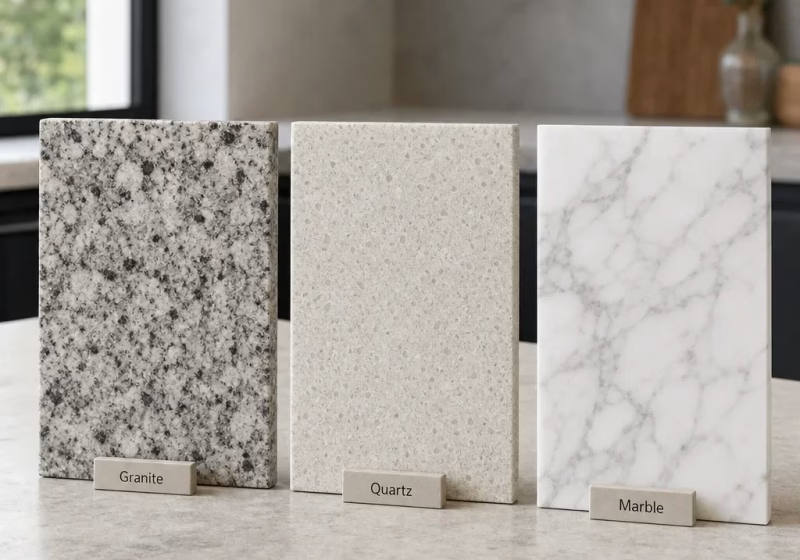
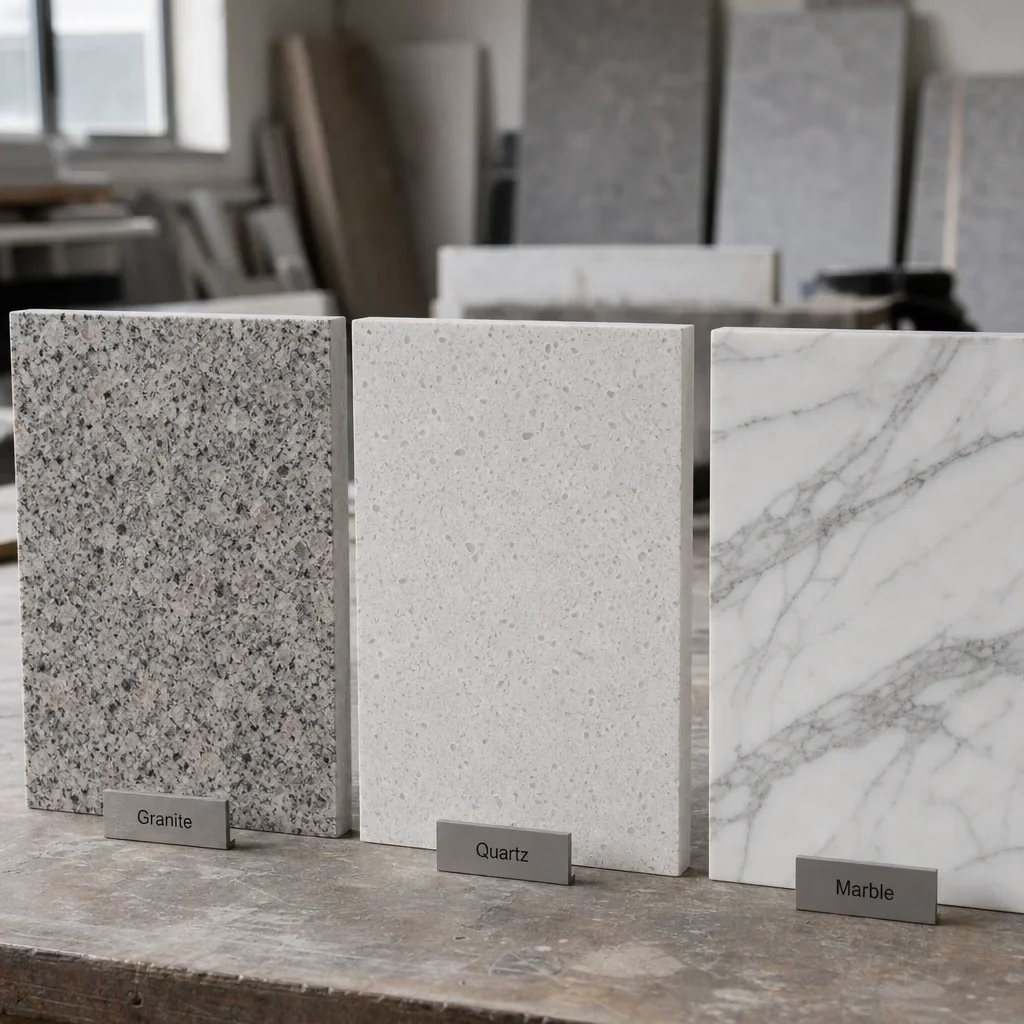
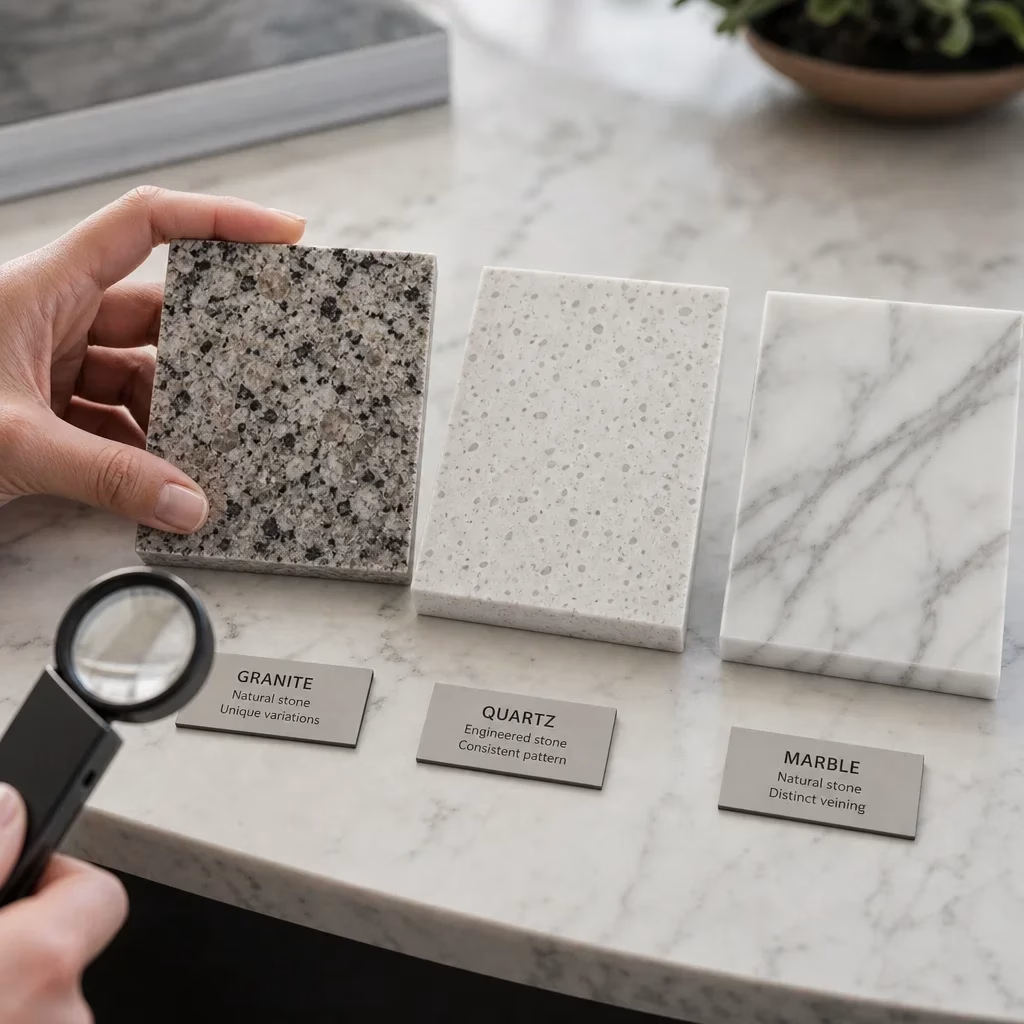
Granite usually gives you a denser, more granular look because you can often see mineral flecks and colour shifts across the slab. Marble usually reads softer and more fluid because the pattern tends to show veining instead of grain.
Quartz often lands between the two in appearance because manufacturers can push it toward a marble look, a granite look, or a very plain modern surface. That consistency is exactly why some homeowners choose granite marble quartz samples in person before they commit to a full slab.
Porosity is one of the biggest daily-use differences. Quartz is generally less porous in normal indoor use, while granite and marble are natural stone and are more likely to benefit from sealing depending on the slab and finish.
Acid sensitivity is the other big separator. Marble reacts the fastest to lemon, vinegar, wine, and harsh bathroom products, which is why marble vs granite vs quartz bathroom countertops is really a maintenance question as much as a style one.
Appearance: Which Material Looks Best in Real Homes?
The best-looking material is the one that matches the room and still makes sense after 5–10 years of use, not the one that wins on a 5-inch sample.
Granite usually has the most natural depth and movement of the three. If you like variation, mineral sparkle, and a slab nobody else has exactly, granite marble quartz countertops often start with granite on the short list.
Marble usually has the most timeless veining. It gives a softer, high-end look that works in classic kitchens, upscale bathrooms, and homes where a bit of wear will not bother you.
Quartz usually gives the most control over the final look. If you want clean whites, warmer solids, or a marble-look pattern that stays more uniform from island to perimeter, quartz is usually easier to plan around cabinetry and backsplash choices.
Quartz that mimics marble is a smart move when you want the light veined look without the same level of maintenance, but some lower-end slabs repeat too evenly and can look manufactured under strong lighting.
Finish matters almost as much as material. Polished surfaces look brighter and show more reflection, honed finishes read softer and can show marks differently, and textured or leathered finishes are more common in some granites than in many marble-look quartz lines.
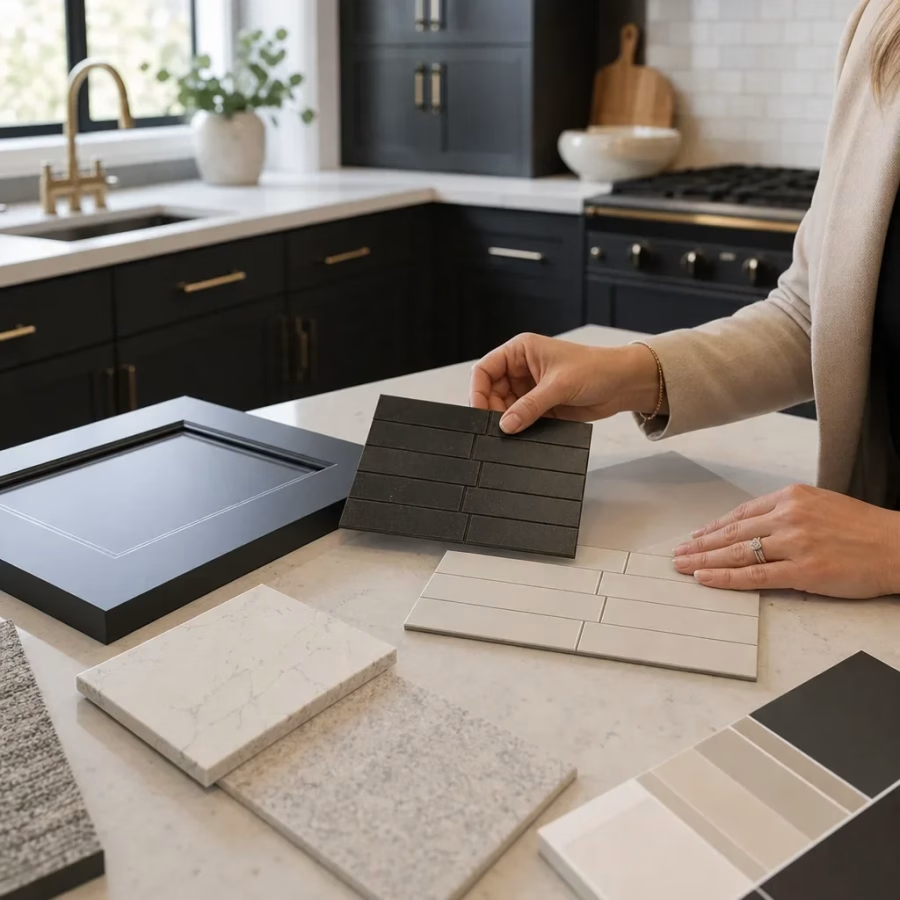
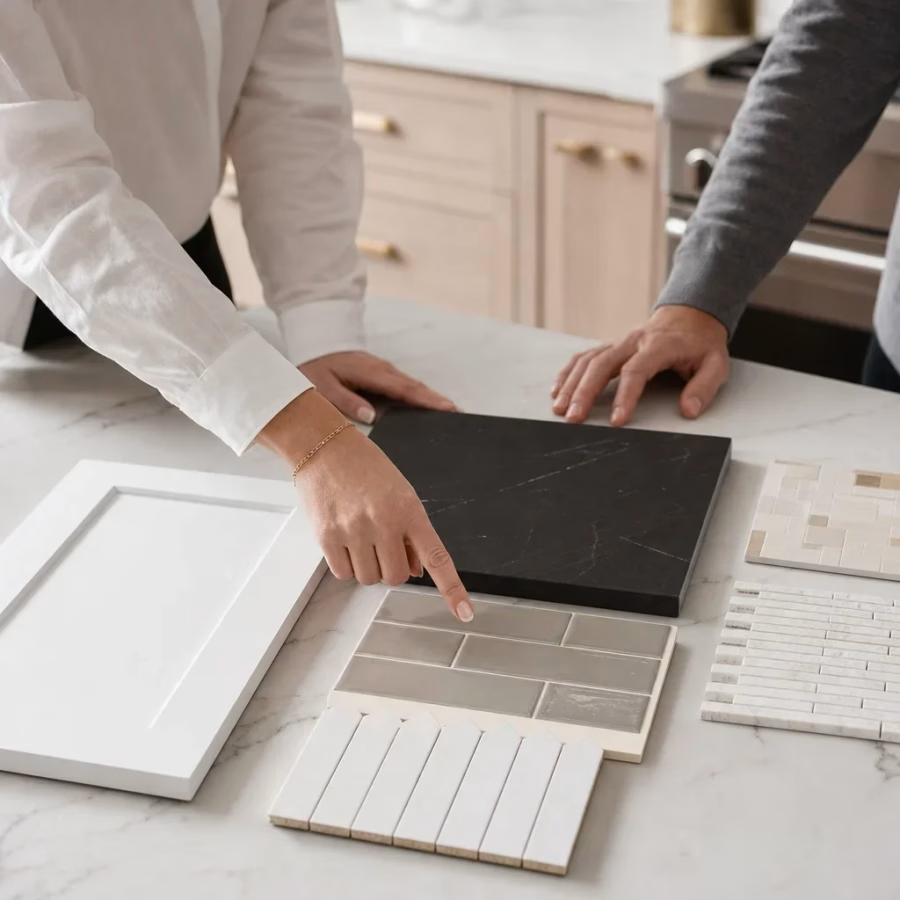
Small samples mislead people all the time. A sample can hide heavy movement, seam location, and pattern direction, while a full slab can run 55–65 square feet or more depending on the supplier and slab size.
Durability: Scratches, Chips, Etching, Stains, and Daily Wear
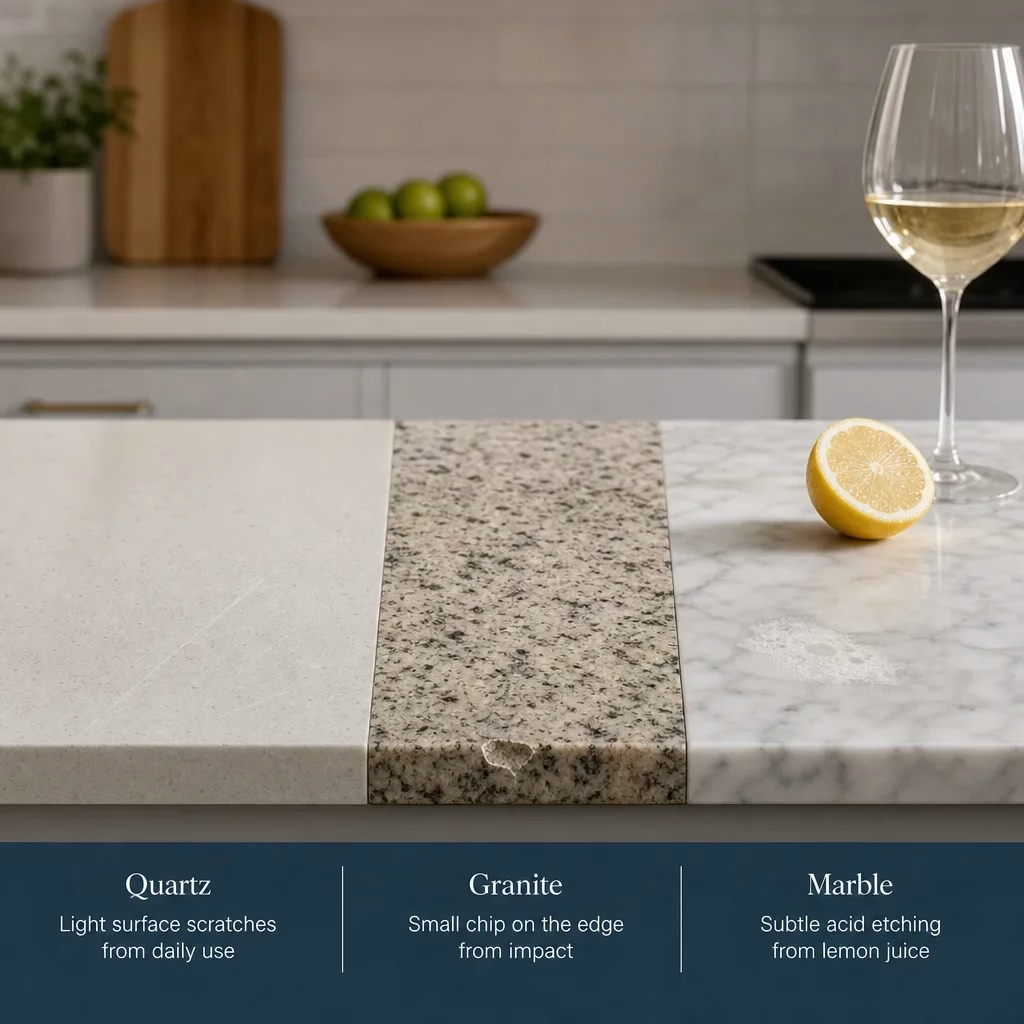
Quartz and granite are usually the two stronger everyday performers, while marble is the most delicate in a busy kitchen. The reason is simple: marble shows etching, fine scratches, and stains faster under normal family use.
Scratch resistance is not the same as chip resistance. A hard surface can still chip at sink corners, outside corners, and narrow overhangs if it takes a hit from a pot or stool.
Quartz is usually very good against normal kitchen staining, but it is not invincible. Dark oils, permanent dyes, and harsh chemicals can still mark or dull some surfaces if they sit too long.
Granite is durable and forgiving for most kitchens, but sealing and stone density matter. A lighter or more porous slab can take on stains faster than a tighter, darker slab if spills are left in place.
Marble is the one that changes character the fastest. Acid etching is not the same as staining; etching is a surface reaction that can dull the finish even when the stone is technically clean.
Repairability also matters. Natural stone can sometimes be improved by a skilled stone pro depending on the damage, while engineered quartz repairs can be more visible on certain colours and patterns.
If you want a countertop that still looks sharp in a high-traffic family kitchen 9 times out of 10, I point people to quartz or granite first, not marble.
Pros and cons of each material
Granite pros
Natural one-of-a-kind slabs
Strong heat tolerance compared with quartz
Good long-term durability in kitchens
Works well outdoors in the right application
Granite cons
Usually needs sealing at some interval
More variation makes slab selection critical
Can chip at edges and corners
Some busy patterns date a kitchen faster than simpler slabs
Quartz pros
Low maintenance in normal indoor use
Broad colour and pattern control
Usually strong stain resistance
Good fit for modern kitchens and condo projects
Quartz cons
Weaker against direct high heat than granite
Some designs look repetitive on large islands
Outdoor UV exposure is not a fit for many interior quartz products
Chemical damage is still possible with the wrong cleaners
Marble pros
Classic veining and luxury look
Ages with character if you like patina
Strong fit for vanities and lower-abuse areas
Often pairs well with traditional and transitional homes
Marble cons
Most prone to etching of the three
More vulnerable to staining and scratching
Usually not the least maintenance countertop
Better for owners who accept visible wear
Heat Resistance: Can You Put Hot Cups or Pans on Granite, Quartz, or Marble?
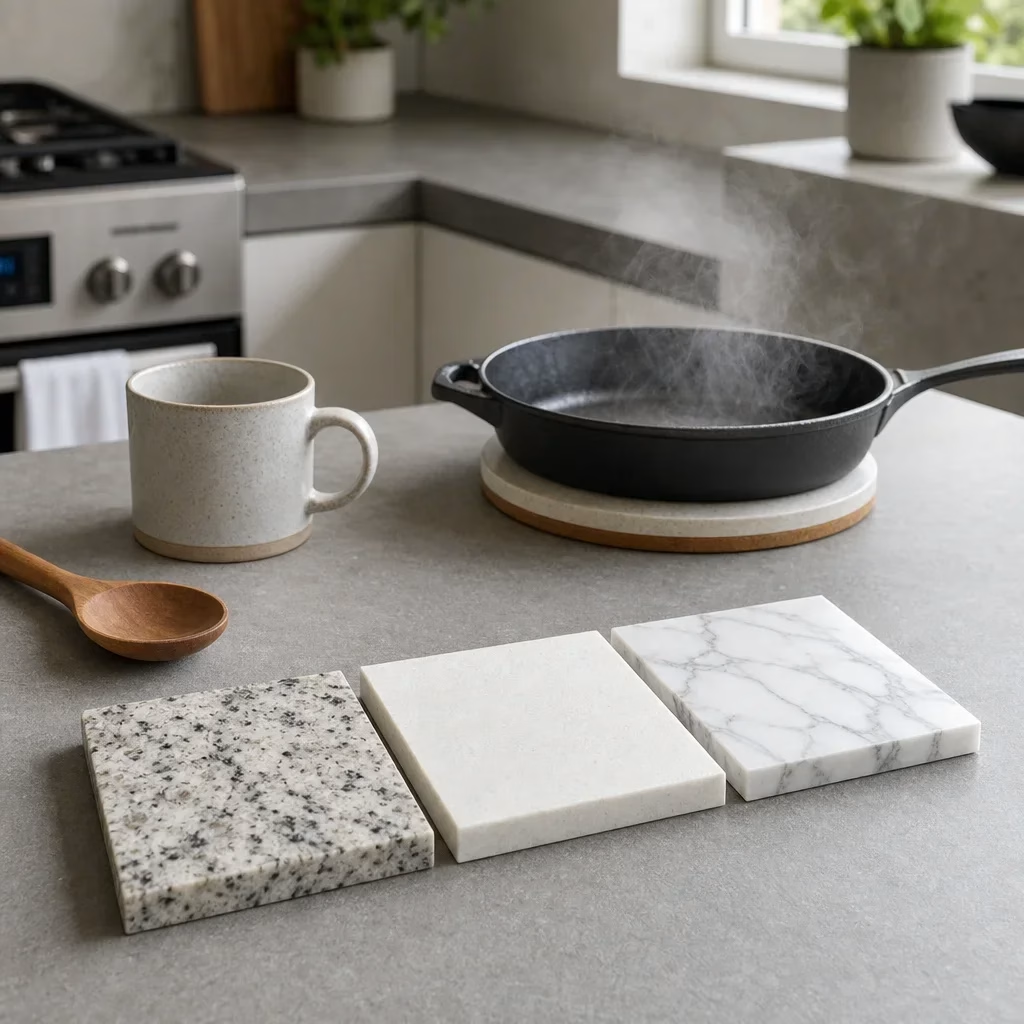
A hot coffee mug is usually lower risk than a hot pan or baking tray, but trivets are still the safe rule for all three materials.
Granite usually handles heat best of the three, which is why people comparing kitchen countertops quartz vs granite vs marble often land on granite if they cook hard and move hot cookware fast.
Quartz is the one I am most careful with around direct heat. The resin binders in engineered slabs can be affected by high heat or sudden temperature shock, so I tell clients not to treat quartz like a landing pad for hot pans.
Marble handles moderate heat better than many people think, but it is still not smart to drop a hot roasting pan straight onto the finished surface. Heat is only one issue; discolouration and finish damage are the others.
A ceramic mug of coffee or tea is usually not the same risk level as a cast-iron pan off the stove. Those are two different heat loads, and homeowners get into trouble when they treat them as equal.
For outdoor kitchens, granite is usually the better fit than standard interior quartz because sun exposure and seasonal temperature swings are harder on many quartz products.
Maintenance and Cleaning: Sealing, Soap, Vinegar, and Disinfecting Wipes
Quartz typically does not need sealing, while granite and marble often do depending on the stone, finish, and sealer system used. The exact maintenance schedule should come from the fabricator or sealer manufacturer for your slab.
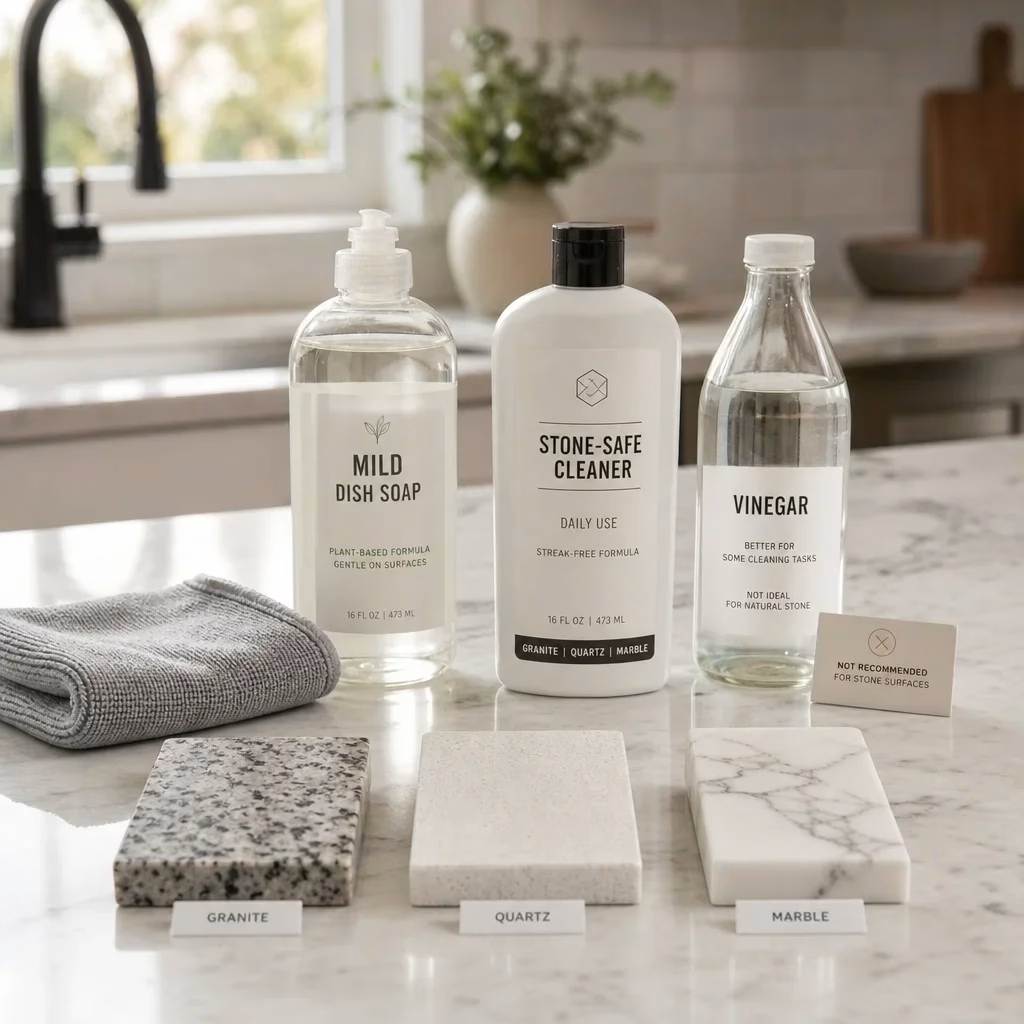
Mild soap, warm water, and a soft cloth are the safest starting point for all three materials. That is the plain answer when homeowners ask if Dawn dish soap is okay for granite or safe on marble.
Vinegar is a bad idea on marble because the acid can etch it, and it is not a cleaner I recommend on granite or quartz either because repeated acidic cleaning can dull finishes and cause avoidable wear.
Bleach wipes and strong disinfecting products are not automatic yeses on any of the three surfaces. Some can dull sealers, attack polished finishes, or affect resin-rich quartz if used repeatedly or left sitting.
Clorox wipes on quartz or granite are not something I tell people to use as a daily cleaner. If a product is not clearly approved by the slab or cleaner manufacturer, I would stay with a pH-neutral stone-safe cleaner instead.
Fast cleanup matters more than fancy product choices. Wine, tomato sauce, oil, makeup, toothpaste, and hair-colour products are all easier to deal with if you wipe them up right away instead of testing the stain resistance for hours.
Cleaners to use vs avoid
Material
Safer routine cleaners
Cleaners to avoid or use only if manufacturer approves
Granite
Mild dish soap, soft cloth, pH-neutral stone cleaner
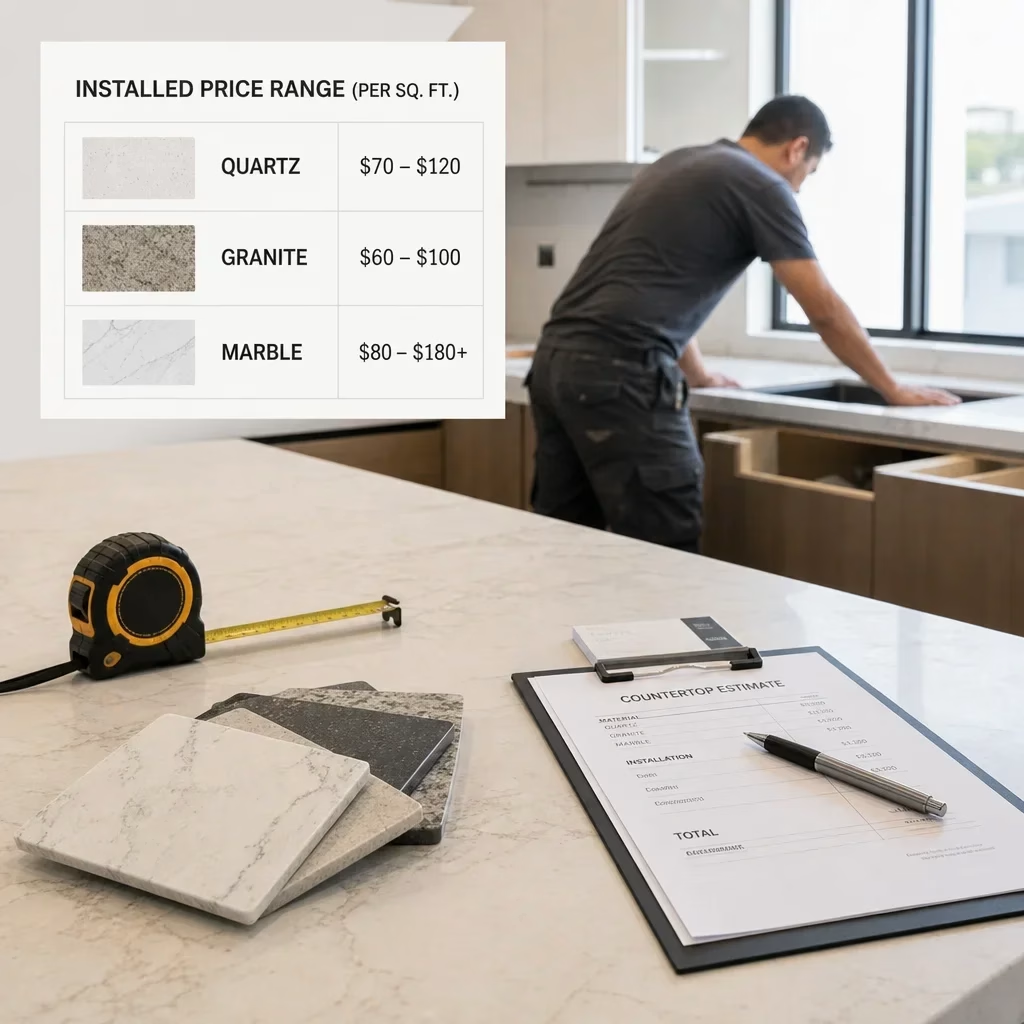
In the GTA, the number that matters is installed price, not just the slab tag at the stone yard. A countertop quote usually bundles material, templating, fabrication, cutouts, edge finishing, delivery, and installation into one project number.
Broadly, installed quartz often lands around $90–$180 per square foot, installed granite around $100–$250 per square foot, and installed marble around $120–$300+ per square foot in the Toronto market depending on slab tier and job complexity.
Those ranges overlap a lot, which is why quartz vs granite price per square foot is not a clean answer. A mid-range quartz can come in below a premium granite, while an entry granite can come in below a designer quartz line.
If you are trying to ballpark 20 linear feet of countertop, the real square footage is often closer to 50–60 square feet once you account for standard depth and layout, so a rough installed range can move from about $4,500–$10,800 for quartz, $5,000–$15,000 for granite, and $6,000–$18,000+ for marble.
Toronto and condo logistics can push pricing higher. Tight stair runs, elevator bookings, parking restrictions, after-hours delivery windows, and large island pieces all add labour and handling risk.
The cost of quartz vs granite vs marble in Canada also shifts with exchange rates, supplier lines, and whether the slab is commodity stock or special order. That is why I tell every client to compare apples to apples on the full scope of work, not just by the material label.
GTA installed cost table
Material
Typical installed range in the GTA*
Quartz
$90–$180/sq. ft.
Granite
$100–$250/sq. ft.
Marble
$120–$300+/sq. ft.
*Broad market ranges only. Slab tier, thickness, cutouts, edges, seams, access, and layout can move the final quote significantly.
What Hidden Costs Affect Countertop Pricing?
The biggest hidden cost is usually fabrication complexity, not the stone itself. Waterfall panels, full-height backsplashes, book-matching, mitred edges, and oversized islands can all change the quote fast.
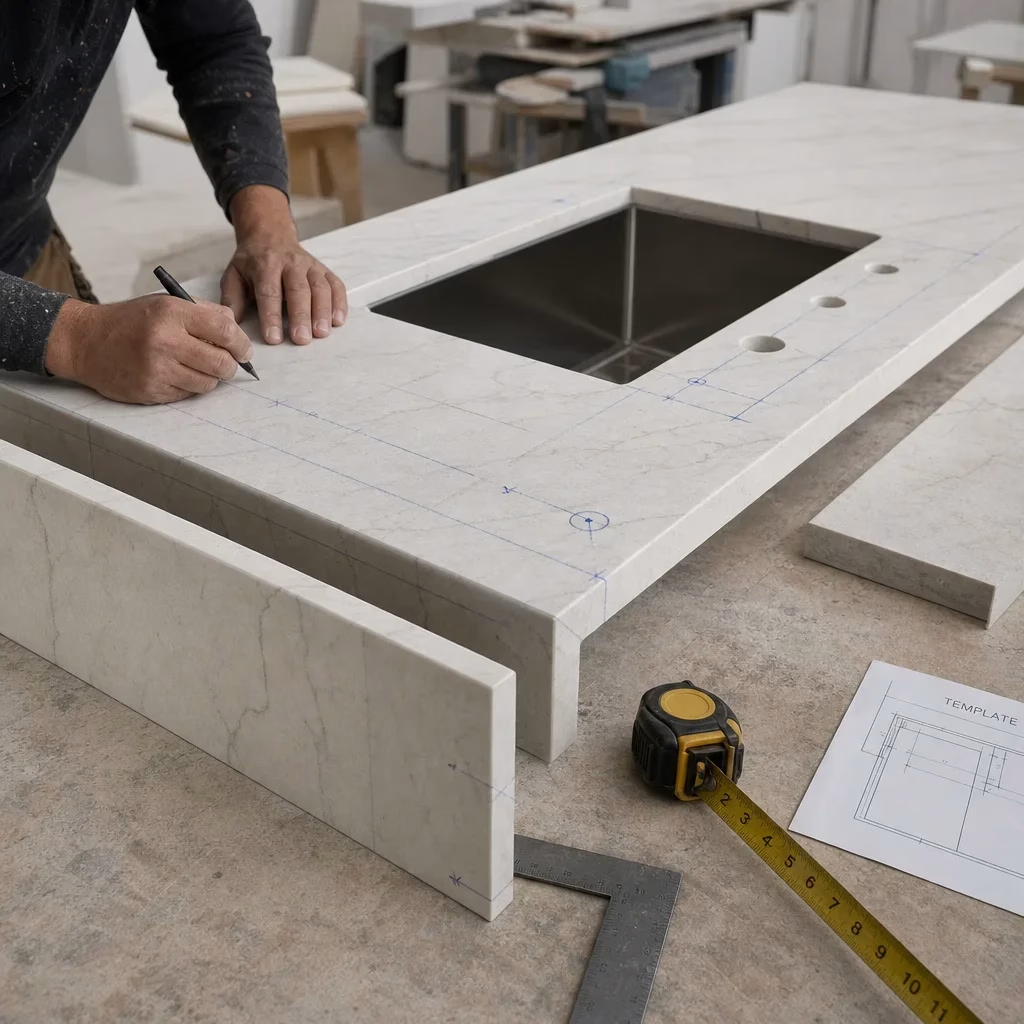
Sink and appliance cutouts add cost because every hole changes labour and breakage risk. Undermount sinks, cooktop cutouts, faucet holes, and soap dispenser holes all need to be templated and cut accurately.
Demolition and plumbing are easy to miss in a first quote. If we are removing old tops, disconnecting and reconnecting plumbing, or correcting out-of-level cabinets and subfloor-related cabinet movement, those are separate scope items that belong in the written quote.
Veined marble and heavily patterned quartz can cost more to lay out well because the fabricator has to plan seam direction, vein flow, and visible faces more carefully. That extra time is real labour, not fluff.
Natural stone selection can also add time and money because you may want to hand-pick the exact slab. I have had jobs where the first slab looked great online and wrong in person, and changing it early saved an expensive change-order later.
Quote comparison only works if the scope of work matches line for line. One fabricator may include templating, sink clips, delivery, and disposal, while another shows a lower number and bills those items later.
Hidden cost checklist
Templating and field measure
Demo and disposal of existing counters
Plumbing disconnect and reconnect
Sink type and mounting hardware
Faucet and accessory drilling
Edge profile upgrades
Backsplash pieces or full-height slab splash
Waterfall ends
Seams and seam placement limits
Delivery access, stairs, crane, or condo logistics
Cabinet leveling or support work before install
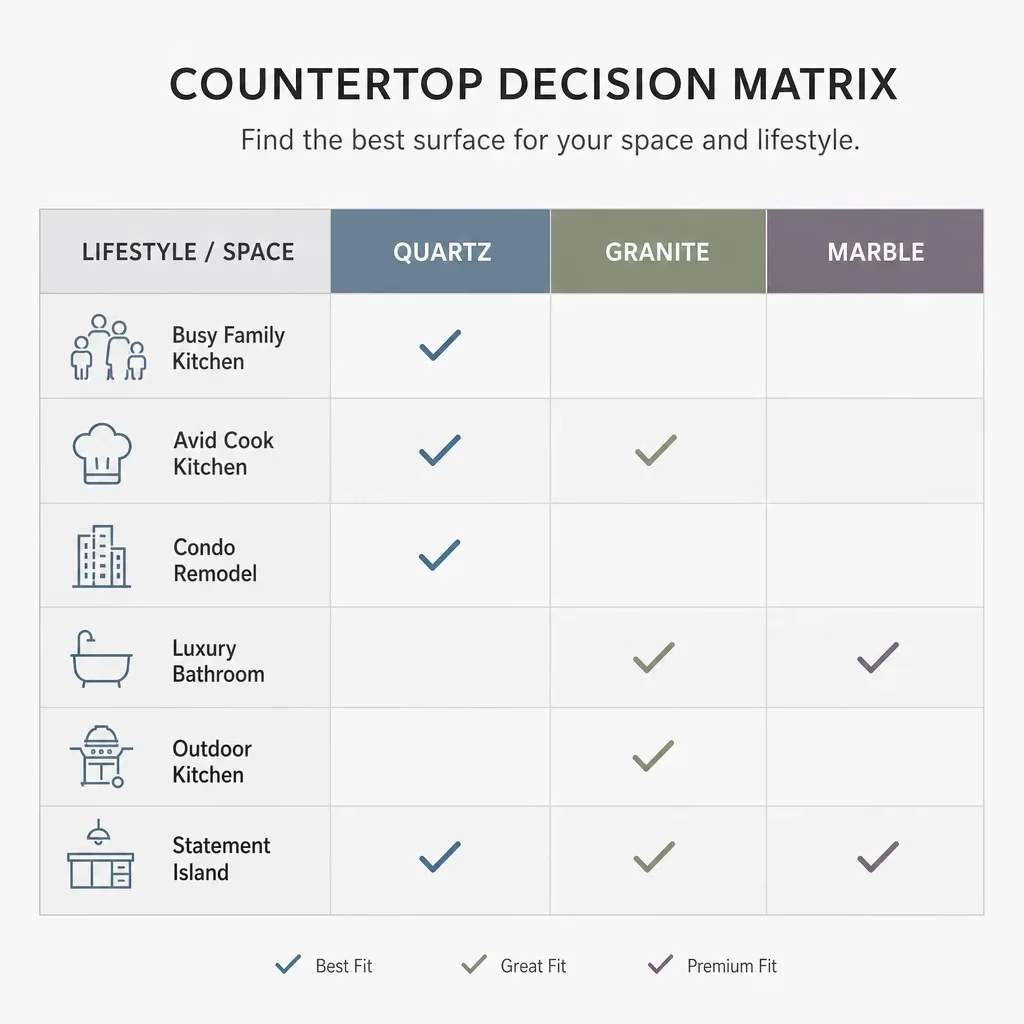
Best for Your Lifestyle: A Decision Matrix
For busy family kitchens, quartz is usually the safest bet because it is the lowest maintenance countertop in this group and gives a predictable finished look.
For homeowners who want natural stone and cook with hot pans all the time, granite is usually the better answer because it balances durability, uniqueness, and stronger heat tolerance.
For luxury bathrooms and lower-abuse vanities, marble can make perfect sense because toothpaste and hand soap are easier to manage there than wine, oil, and lemon juice in a main kitchen.
For rental properties and condo kitchens, quartz usually wins because consistency matters, replacements are easier to match across units, and the surface asks less from the owner.
For outdoor kitchens, granite is usually the best of the three because many interior quartz slabs are not made for UV exposure and marble requires a more forgiving owner.
For homeowners chasing the best countertop for the money, the answer is usually mid-range quartz or entry-to-mid granite, not premium marble, because performance and installed value stay more balanced.
Household or room
Best fit
Why
Busy family kitchen
Quartz
Low maintenance and strong stain resistance in daily use
Avid cook kitchen
Granite
Better heat tolerance and natural-stone durability
Condo remodel
Quartz
Predictable colour and easier design control
Luxury bathroom
Marble or quartz
Marble for look, quartz for lower maintenance
Outdoor kitchen
Granite
Better fit than standard interior quartz
Statement island
Granite, quartz, or marble
Depends on slab look, seam plan, and budget
Is Marble Actually Practical in Kitchens?
Yes, marble can be used in kitchens, but it is practical only if you are choosing it with open eyes. You are buying the look first and accepting etching, scratches, and patina as part of the package.
Marble is usually a poor fit for a hard-use family kitchen where citrus, vinegar, tomato sauce, and rushed cleanup are part of daily life. That is the simple reason many homeowners switch from granite countertop vs marble comparisons over to quartz before they sign off.
Marble works better in kitchens where the owner is careful, likes lived-in character, and is not chasing a pristine finish forever. I have seen it work well in baking zones, bar areas, and decorative sections that do not take the same abuse as the main prep run.
If you want the marble look without the same upkeep, quartz is usually the compromise. If you want natural stone but less delicacy than marble, granite is usually the stronger middle ground.
How to Tell Granite, Quartz, and Marble Apart
Granite usually shows granular mineral flecks and more random colour breakup, while marble usually shows veining and softer cloud-like movement. Quartz usually looks more controlled, with either a uniform field or a repeatable engineered pattern.
One of the easiest ways to tell if a countertop is quartz or granite or marble is to look for repetition. If the same vein shape or pattern block repeats too neatly across a long run, it is often quartz.
Edges and underside views can help too. Natural stone often shows more variation through the body, while some engineered products reveal a more consistent internal structure at exposed edges and cutouts.
Finish and lighting can fool people. A honed black granite, a white marble-look quartz, and a light polished marble can all read differently under warm pot lights than they do in a slab yard.
A small showroom sample is not enough to identify performance on its own. I always tell clients to look at the full slab, not just the sample board, because seam location and pattern scale matter as much as colour.
Long-Term Value: Lifespan, Repair Risk, and Resale
All three materials can last for decades if the layout, fabrication, and installation are done properly. The bigger difference is how much wear you will see along the way and how much maintenance you are willing to take on.
Quartz usually wins on low-maintenance ownership cost because you are not typically budgeting for sealing and you are less likely to see acid etching in a normal kitchen.
Granite can deliver very strong long-term value because it is durable, repairable in some damage scenarios, and still reads as natural premium material in the resale market.
Marble can still support a high-end renovation, but only when it fits the house and the buyer. Resale value is usually tied more to the overall renovation quality, cabinet design, layout, and finish level than to one countertop label by itself.
A well-coordinated kitchen renovation or bathroom renovation in the GTA sells better than a mismatched one. That means the top has to work with the room, not just win a granite vs marble vs quartz cost argument on paper.
Current Countertop Trends: What’s Popular and What’s Dated?
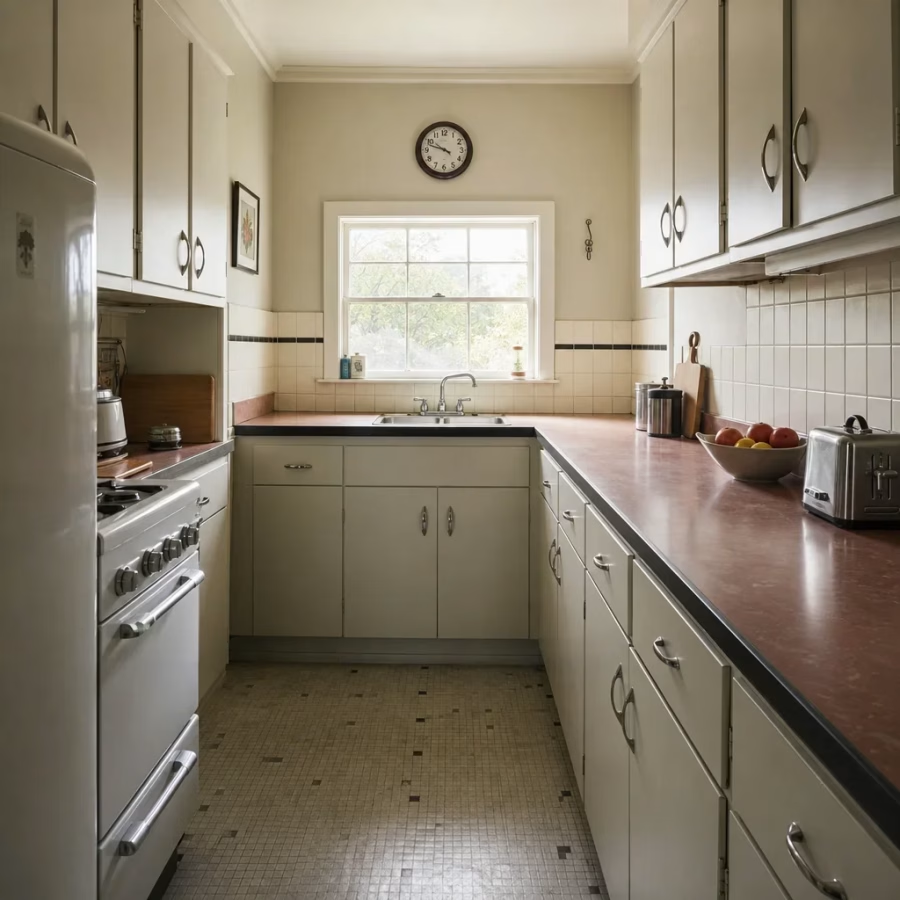
Right now, lighter tones, warmer neutrals, softer veining, and less chaotic patterns are usually the safest choices for a long-lasting kitchen. Busy speckled granite is what most people mean when they say granite looks dated, not all granite.
Quartz became popular because it gives a cleaner, more controlled look and asks less from the owner day to day. That does not mean granite is gone; it means the market shifted away from certain patterns and colour mixes.
Marble-look quartz is still popular because it gives homeowners the veined look without as much upkeep. The downside is that cheap quartz can look flat or repetitive, especially on large islands with strong direct light.
The best trend advice is to avoid chasing a one-year look. A countertop should work with cabinet colour, floor tone, backsplash, and the style of the house for 10–20 years, not just for the next social post.
I would not make decisions based on claims that quartz is banned or granite is dead. Those are internet takes, not good renovation planning.
Health, Safety, and Low-Toxicity Questions Homeowners Ask
Finished installed countertops are a different issue from fabrication dust. Most of the health concern around engineered stone has focused on worker exposure to crystalline silica during cutting and polishing, not on normal day-to-day use of a finished countertop in your home.
Claims that quartz is being banned are usually oversimplified. Rules and discussions in some places have focused on fabrication safety and dust control, not a blanket ban that means every quartz kitchen must be ripped out.
Radon questions come up most with natural stone, but I would not sensationalize that topic. If a homeowner has a concern about indoor air quality, the right move is to test the home as a whole instead of assuming one countertop material is the cause.
There is no single healthiest countertop material I can honestly declare for every home without seeing the product documentation. If low-toxicity is a top priority, ask for manufacturer information, confirm sealer choices, and work with reputable suppliers and fabricators.
So, Which Countertop Should You Choose?
Choose quartz if low maintenance, a controlled look, and everyday convenience matter most. Choose granite if you want natural stone and stronger heat performance. Choose marble if you want the richest classic look and you are comfortable with patina, sealing, and more care.
If you are stuck between granite or quartz or marble, decide in this order: how hard the room will be used, how much maintenance you will actually do, whether you want natural variation or consistency, and what the full installed budget allows.
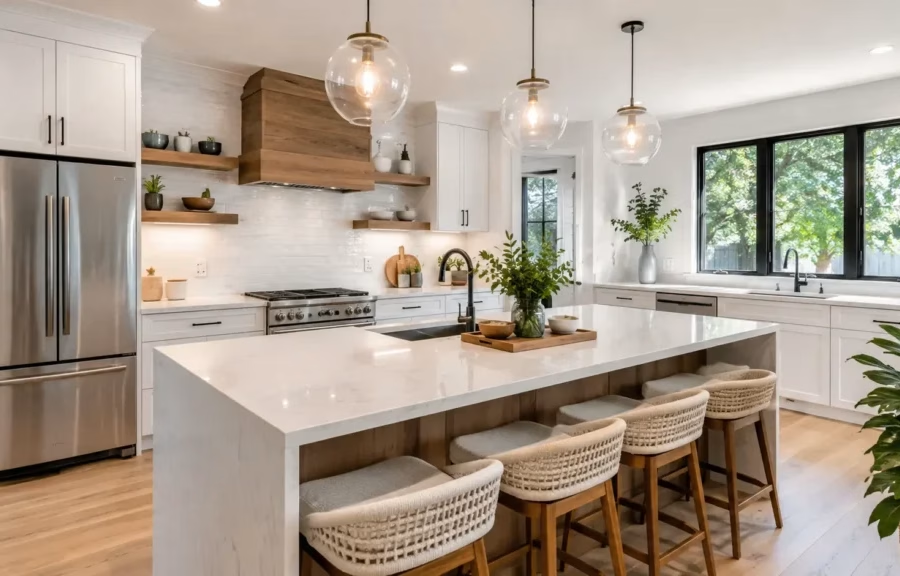
The best countertop for your money is usually the one that fits the whole renovation, not just the sample you liked under showroom lights. Cabinet colour, edge profile, seam planning, backsplash, and sink setup all change how expensive the final room feels.
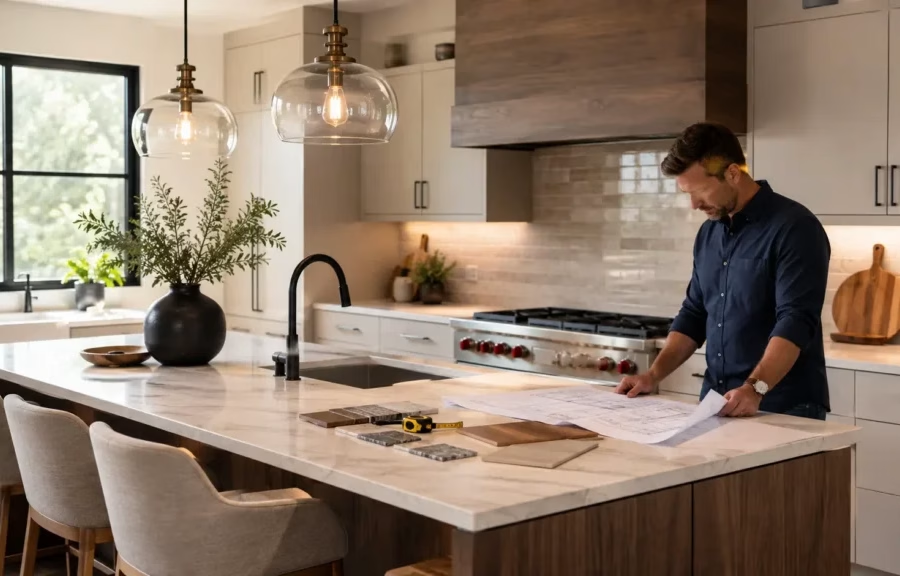
When I scope a kitchen or bathroom, I do not choose tops in isolation. I look at the full job, from layout and cabinet lines to slab size, fabrication coordination, and install timing, because that is what keeps the finish looking intentional instead of pieced together.
If you are comparing granite vs quartz vs marble countertops for a renovation in Toronto or the GTA, get the space measured properly and put the material decision in context with the rest of the room. That is where the right answer usually gets clear.
FAQ
Which is better for a kitchen: granite, quartz, or marble?
Quartz is usually best for a low-maintenance kitchen, granite is usually best if you want natural stone and stronger heat tolerance, and marble is best only if you accept more upkeep and wear.
Which is cheaper: quartz, granite, or marble?
Entry granite and mid-range quartz often overlap, while marble is usually the highest-priced of the three once installed. In the GTA, broad installed ranges often run about $90–$180 per square foot for quartz, $100–$250 for granite, and $120–$300+ for marble.
Do granite, quartz, and marble countertops need sealing?
Quartz typically does not need sealing, while granite and marble often do depending on the slab and finish. Your fabricator or sealer manufacturer should confirm the maintenance plan for your specific top.
Can you put hot coffee or hot pans on quartz countertops?
A hot mug is usually lower risk than a hot pan, but I still recommend trivets. Quartz is more heat-sensitive than granite because of the binders used in the slab.
Can you use vinegar or bleach wipes on quartz, granite, or marble?
I would avoid vinegar on all three and especially on marble. I also would not use bleach wipes as a routine cleaner unless the product maker clearly approves it for that surface.
Why do people choose quartz over granite?
They usually want less maintenance, more pattern consistency, and a cleaner modern look. Quartz also makes slab matching and design planning easier in many kitchens and condos.
Is marble practical for kitchen countertops?
It can be, but only for homeowners who are comfortable with etching, stains, and patina. For most busy family kitchens, quartz or granite is the more forgiving choice.
How can you tell whether a countertop is granite, quartz, or marble?
Granite usually shows mineral flecks, marble usually shows soft veining, and quartz usually looks more controlled or repeatable. Looking at the full slab, the edge, and pattern repetition helps more than looking at a small sample.
Which countertop is the lowest maintenance?
Of these three, quartz is usually the lowest maintenance because it typically does not need sealing and resists normal kitchen staining well.
What hidden costs affect countertop installation in Toronto?
The big ones are templating, demo and disposal, plumbing reconnects, cutouts, edge upgrades, backsplash pieces, waterfall ends, seam planning, and condo delivery logistics. Those items can shift the project cost more than homeowners expect.
Eric Kotlyar
Eric came to Canada in 2001 with an engineering degree from Ukraine and the kind of structural mindset that asks why a wall holds before it asks what colour to paint it. Like many newcomers with European credentials, he started over — first on Toronto construction sites, then progressively in design and project oversight as North York builders recognized the engineer behind the toolbelt.
admin
Eric came to Canada in 2001 with an engineering degree from Ukraine and the kind of structural mindset that asks why a wall holds before it asks what colour to paint it. Like many newcomers with European credentials, he started over — first on Toronto construction sites, then progressively in design and project oversight as North York builders recognized the engineer behind the toolbelt.